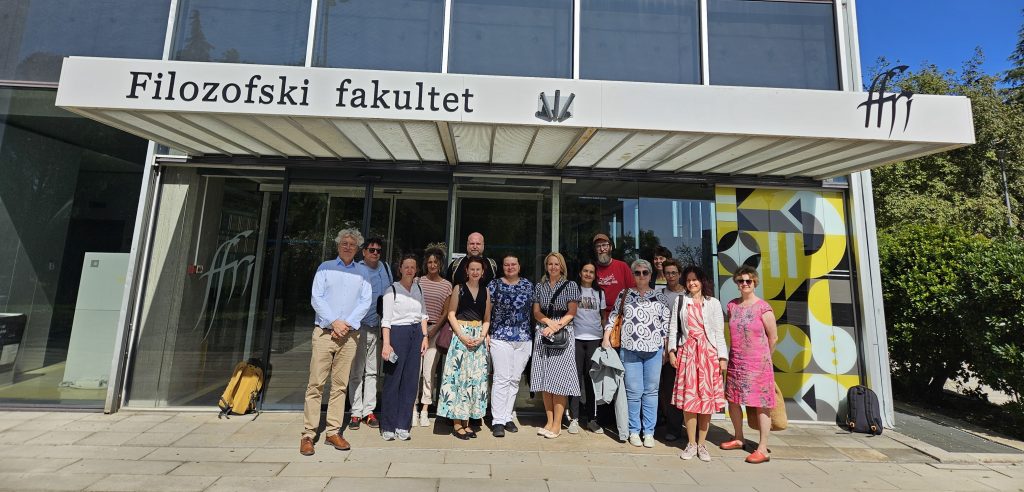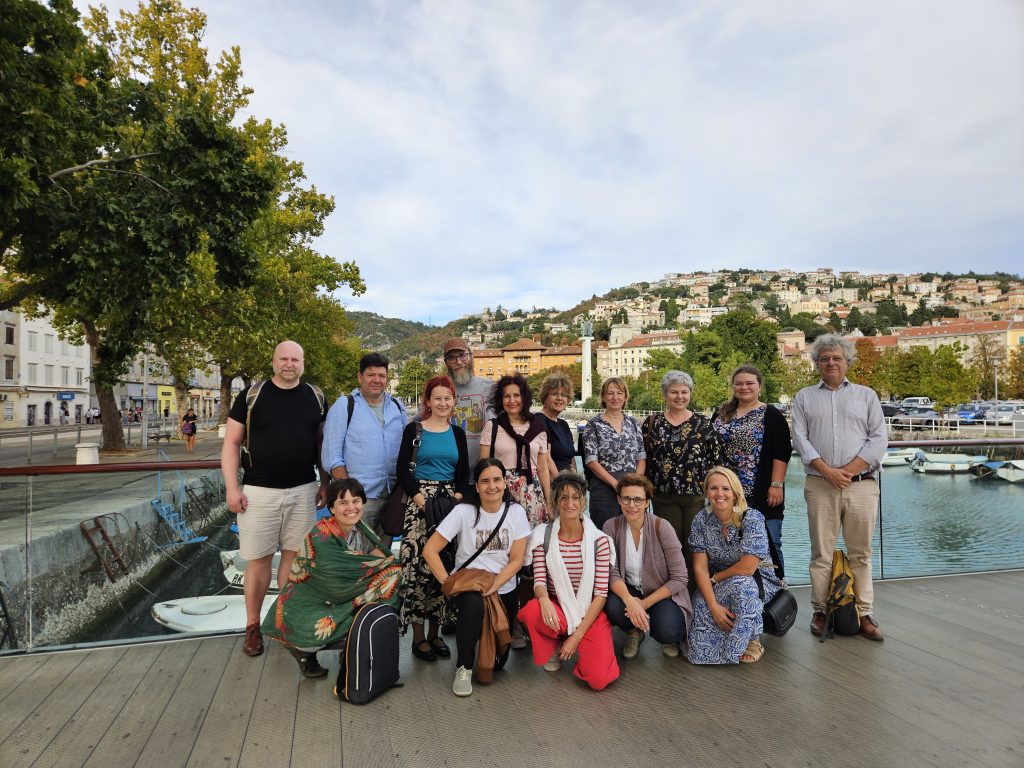
From 21 to 23 September 2026, the Faculty of Humanities and Social Sciences at the University of Rijeka hosted the first coordinators’ meeting of the CEEPUS network Hungarian Studies and Central European Cultural Transfer, organised by the Hungarian Language Lectorate of the Faculty of Humanities and Social Sciences and lecturer Eszter Tamaskó.
The three-day meeting brought together lecturers and coordinators from 13 universities in seven Central European countries – Croatia, Hungary, Romania, Slovakia, the Czech Republic, Poland and Slovenia. The network, which comprises 15 higher education institutions from nine countries, focuses on the development of Hungarian Studies, the promotion of student and staff mobility, and the study of different forms of cultural transfer within the Central European region. In Croatia, the CEEPUS programme is implemented by the Agency for Mobility and EU Programmes (AMPEU).
The main professional session was held at the Faculty on 22 September. The participants were welcomed on behalf of the Faculty management by Vice-Dean Assoc. Prof. Boris Ružić, PhD. During the meeting, the participants shared their experiences and examples of good practice in CEEPUS mobility programmes, presented opportunities offered by partner institutions to students and teaching staff, and discussed proposals for the further development of the network and future joint activities.
As the host of the network’s first coordinators’ meeting, the Hungarian Language Lectorate, led by lecturer Eszter Tamaskó, designed and organised the entire programme in Rijeka. In addition to the professional programme, thematic walks through Rijeka and Trsat introduced the participants to the city, with particular emphasis on Rijeka’s Hungarian cultural and historical heritage and its role as a place of encounter and cultural transfer between different Central European traditions. By organising the meeting, the Hungarian Language Lectorate further strengthened cooperation with partner Hungarian Studies centres and universities, while creating new opportunities for student and staff mobility, joint programmes and future international projects.